How to Get a FENSA Certificate When Selling Your House
If you are in the process of selling your home, it can come as a surprise when your solicitor asks for a FENSA certificate for your replacement windows or doors. Many homeowners have never heard of FENSA until they try to move house, and suddenly a missing certificate becomes an urgent problem that could potentially delay the sale.
The good news is that in most cases, the issue can usually be resolved fairly easily once you understand your options.
How to get a FENSA certificate?
What is a FENSA Certificate?
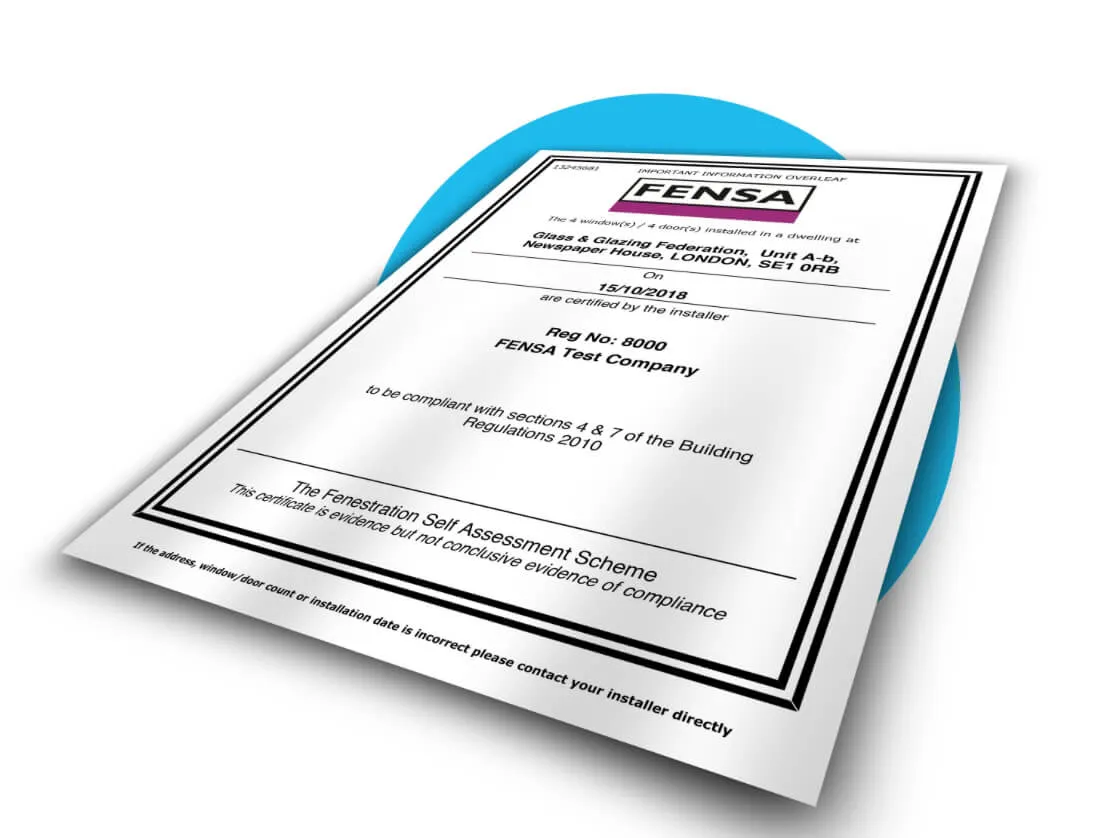
A FENSA certificate is an official document that confirms replacement windows or doors were installed in compliance with Building Regulations in England and Wales.
FENSA stands for the Fenestration Self-Assessment Scheme. It was introduced so approved window installers could self-certify their work without homeowners needing separate inspections from local council building control departments.
If you had double glazing, uPVC windows, aluminium windows, bifold doors, patio doors or replacement external doors fitted after April 2002, your solicitor will often ask for proof that the installation complied with Building Regulations.
This is where the FENSA certificate becomes important.
Why Solicitors Ask for a FENSA Certificate
When someone buys your house, their solicitor wants to ensure that any building work carried out was legally compliant. Replacement windows and doors fall under Building Regulations because they affect:
- Energy efficiency
- Ventilation
- Fire escape routes
- Structural safety
Without certification, buyers may worry that the work was not carried out properly or that the local authority could theoretically take enforcement action.
In reality, enforcement on older installations is extremely rare, but solicitors still routinely request the paperwork during conveyancing.
How to Get a Replacement FENSA Certificate
If your replacement windows was originally installed by a FENSA Approved Installer, replacing a lost certificate is usually straightforward.
You do not need to contact the installer directly. Instead, you can order a replacement certificate online through the official FENSA website.
Typically you will need:
- Your postcode
- House number or property name
- The approximate installation date if known
Once the property is located on the FENSA database, you can order a replacement certificate for a small fee, usually around £25.
The replacement certificate normally arrives within one to two weeks, although digital confirmation may be available sooner.
For many sellers, this is the simplest solution and avoids unnecessary delays in the conveyancing process.
What if You Never Had a FENSA Certificate?
This is also very common.
Sometimes:
- The installer was not FENSA registered
- The paperwork was lost many years ago
- The installation was never properly registered
- The work was carried out privately by a builder or handyman
In these situations, you generally cannot obtain a genuine FENSA certificate retrospectively.
However, this does not necessarily mean your house sale will fall through.
Option 1: Retrospective Building Regulations Approval
One option is to contact your local council Building Control department and apply for retrospective approval, sometimes called regularisation.
A building inspector will inspect the windows or doors to check whether the installation meets current or relevant Building Regulations standards.
They may assess:
- Safety glass locations
- Fire escape openings
- Ventilation
- Energy efficiency
- General installation quality
If the work passes inspection, the council can issue a retrospective Building Regulations Completion Certificate.
This effectively replaces the need for a FENSA certificate.
However, there are some downsides:
- The process can take time
- Inspection fees are usually between £300 and £500
- Remedial work may occasionally be required if problems are found
For this reason, many sellers choose a different route.
Option 2: Indemnity Insurance
In practice, the most common solution when selling a house without a FENSA certificate is indemnity insurance.
This is a one-off insurance policy that protects the buyer and mortgage lender against potential issues arising from the lack of Building Regulations certification.
These policies are generally inexpensive compared to retrospective council approval and often cost between GBP100 and GBP300 depending on the property.
In many conveyancing transactions, indemnity insurance is accepted perfectly well by the buyer's solicitor.
However, there is one important catch.
If you contact the local council Building Control department before arranging indemnity insurance, the policy may become invalid or unavailable because the council has already been alerted to the issue.
This is why it is very important to speak to your solicitor before contacting Building Control.
Will Missing a FENSA Certificate Stop a House Sale?
Usually not.
Missing FENSA certificates are extremely common, especially in properties where windows were installed many years ago.
Most sales proceed successfully using either:
- A replacement certificate
- Retrospective approval
- Indemnity insurance
The key thing is to address the issue early rather than leaving it until the final stages of the sale.
How to Avoid Problems in the Future
Whenever you replace windows or doors:
- Always use a FENSA Approved Installer
- Keep copies of all certificates and invoices
- Store digital backups
- Check the certificate arrives after installation
These small steps can save considerable stress years later when you decide to sell your property.
If you are currently dealing with missing paperwork during a house sale, try not to panic. In most cases there is a practical solution available, and experienced solicitors handle these situations regularly.